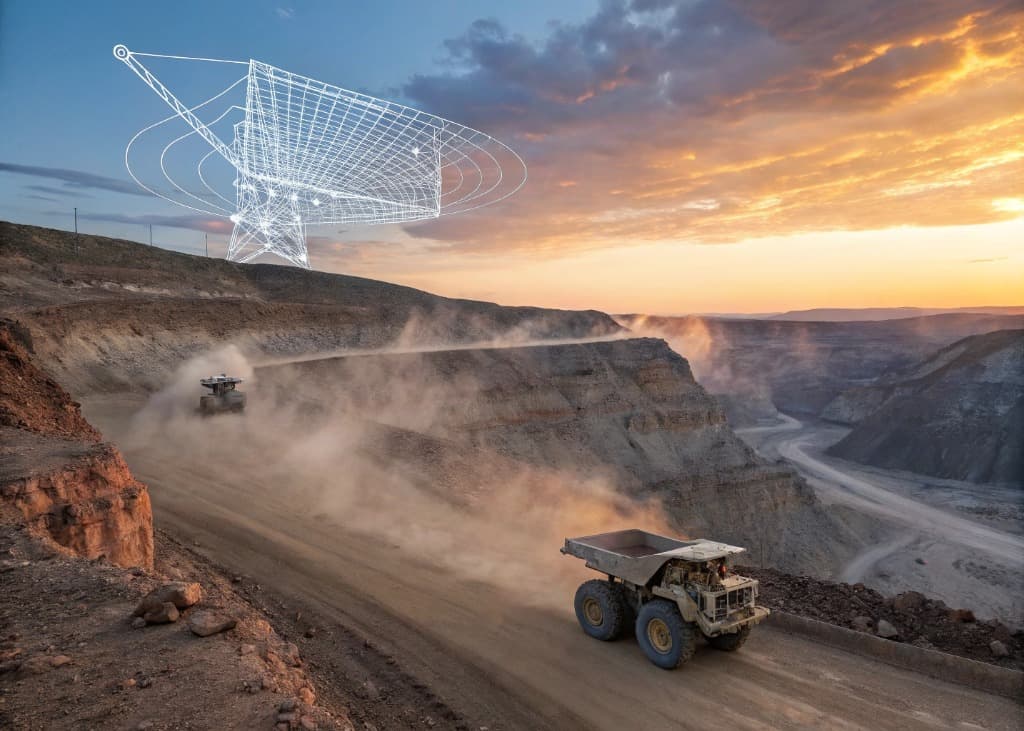
Quick Answer: Digital twins model equipment, processes, and subsurface geology, then update with real data for rapid decisions. AI turns those twins into living systems that predict failures, optimize throughput, and improve safety. The same principles that revolutionize mining also transform how local businesses manage lead flow and customer relationships.
Key Takeaways
- Digital twins create virtual replicas of physical assets that update with real-time data
- AI turns those twins into living systems that predict failures, optimize throughput, and improve safety
- Canada is backing digital transformation in resources, aligning with ESG and productivity goals
- The same AI-first principles apply to local businesses managing leads and customer pipelines
- SLIME Media Solutions builds AI systems for both resource companies and local service businesses
What Is a Digital Twin?
A digital twin is a virtual replica of a physical asset, process, or system. Unlike a static 3D model, a digital twin is connected to its physical counterpart through sensors and data feeds. Changes in the real world update the virtual model in real time.
Think of it this way: if you have a haul truck in a mine, its digital twin knows its current location, engine temperature, fuel consumption, and maintenance history at any given moment. The twin becomes a testing ground. You can simulate different operating conditions, predict when components will fail, and optimize performance without touching the actual equipment.
The concept originated in manufacturing and aerospace but has expanded rapidly into resource extraction, infrastructure, healthcare, and business operations.
Digital Twins in Mining and Exploration
Underground Operations
Underground mines present unique challenges: limited visibility, dynamic conditions, and high safety stakes. Digital twins address these challenges by creating comprehensive virtual models of the mine environment.
Geological Modeling: As drilling and excavation progress, the digital twin updates its understanding of ore body geometry, grade distribution, and geotechnical conditions. This dynamic model informs extraction planning far more accurately than static geological interpretations.
Ventilation Optimization: Air quality and temperature management are critical underground. Digital twins simulate airflow patterns and optimize ventilation system settings, reducing energy consumption while maintaining safety standards.
Equipment Tracking: In complex underground networks, knowing where every piece of equipment is located at every moment improves logistics and safety. Digital twins provide real-time fleet management visibility.
Open Pit Operations
Open pit mines benefit from digital twins at multiple scales:
Pit Development: The twin models the evolving pit geometry, tracking bench progression, wall stability, and material movement. Planners test alternative extraction sequences virtually before committing to operational changes.
Haul Route Optimization: Truck routes, dump locations, and crusher feed schedules can be simulated to minimize cycle times and fuel consumption. Small improvements in haul efficiency compound into significant cost savings.
Water Management: Pit dewatering and surface drainage are modeled to predict pump requirements and identify potential issues before they cause operational delays.
Exploration Applications
Digital twins are transforming exploration workflows:
Subsurface Modeling: As AI-assisted exploration generates new data, digital twins integrate geophysics, geochemistry, and structural interpretations into unified 3D models. These models dynamically update as new drill results arrive.
Scenario Testing: Before committing to expensive drill programs, teams can simulate different geological hypotheses and assess which interpretations best explain available data.
Resource Estimation: Digital twins support more rigorous and transparent resource estimates by maintaining full audit trails of data integration and modeling decisions.
AI-Powered Twins: From Static Models to Living Systems
The real power of digital twins emerges when AI and machine learning are integrated:
Predictive Maintenance: AI analyzes patterns in sensor data to predict equipment failures before they occur. Maintenance shifts from reactive (fix when broken) to predictive (fix before failure). This reduces downtime and extends equipment life.
Autonomous Optimization: AI continuously adjusts operating parameters to optimize objectives like throughput, recovery, or energy efficiency. The digital twin tests adjustments virtually before implementing them physically.
Anomaly Detection: Machine learning identifies unusual patterns that might indicate developing problems. Early warning systems alert operators to deviations from normal behaviour.
Simulation and Training: AI-powered digital twins provide realistic training environments for operators. Personnel can practice handling unusual situations without real-world consequences.
The Business Parallel: Digital Twins for Customer Pipelines
Here is where the concept becomes directly relevant to every business, not just mining operations. The same principles that make digital twins powerful in mining apply to managing customer relationships and lead flow.
Think of your customer pipeline as a system with measurable states and predictable behaviors. Just as a mining digital twin tracks ore body characteristics, a business digital twin tracks customer attributes and behaviors:
- Lead Source and Quality: Where customers come from and how likely they are to convert
- Engagement Patterns: How customers interact with your content, emails, and website
- Conversion Probabilities: Which prospects are ready to buy and which need nurturing
- Customer Lifetime Value: How much revenue each customer relationship generates
- Churn Risk: Which customers are likely to leave and when
Our automation systems create these customer pipeline twins. Real-time data from your CRM, website analytics, and communication tools feed into models that predict outcomes and trigger automated actions.
Real-World Examples
Mining: Haul Truck Fleet Optimization
A copper mine in British Columbia implemented digital twins for their haul truck fleet. Sensors tracked location, speed, fuel consumption, engine parameters, and load weights. AI analysis revealed that specific route combinations and loading sequences reduced fuel consumption significantly. Predicted maintenance intervals improved, reducing unplanned downtime. Annual savings exceeded the implementation cost within the first year.
Local Business: Restaurant Reservation System
A mid-sized restaurant in Surrey deployed what we call a "customer twin" system. The system tracked reservation patterns, no-show history, spending behavior, and seasonal trends. AI predicted demand for each time slot, enabling dynamic staffing and targeted promotions. Reservations increased substantially. No-show rates dropped dramatically. The owner gained visibility that previously required gut instinct.
Service Business: Auto Detailing Pipeline
An auto detailer in Abbotsford used an AI voice agent connected to a real-time lead pipeline model. When calls came in, the system immediately qualified leads, captured information, and booked appointments. The digital twin tracked lead sources, conversion rates by service type, and customer rebooking patterns. Response time dropped from hours to seconds. Close rates improved significantly.
Canada's Digital Transformation Agenda
Canada's federal strategy emphasizes digital technologies in mining and resources. Several trends support adoption of digital twin approaches:
ESG Pressures: Investors and regulators demand better environmental and safety performance. Digital twins enable more precise operations that reduce waste and improve safety.
Productivity Imperatives: Canadian mining faces cost pressures from aging infrastructure and remote locations. Digital optimization offers productivity gains without capital-intensive physical changes.
Workforce Transitions: As experienced operators retire, digital twins preserve institutional knowledge and provide training platforms for new workers.
Data Availability: Government geological surveys and open data initiatives provide foundation data layers that support digital twin development.
Implementation Considerations
Data Infrastructure First
Digital twins require data connectivity. Before building sophisticated models, ensure you have:
- Reliable sensor networks or data collection systems
- Data storage and processing infrastructure
- Integration between operational technology and information technology
- Cybersecurity measures appropriate for connected systems
Start Narrow, Prove Value, Expand
Do not attempt to build a comprehensive digital twin immediately. Start with a specific high-value application: a single piece of critical equipment, a defined process, or a specific customer journey. Prove value in that narrow scope before expanding.
Domain Expertise Matters
Digital twin projects fail when they treat the technology as purely a software problem. The models must reflect operational reality. Mining digital twins require geological and engineering expertise. Customer pipeline twins require marketing and sales expertise. Technology enables but does not replace domain knowledge.
Change Management
Operations teams may resist new monitoring and optimization systems. Successful implementations involve stakeholders early, demonstrate value clearly, and respect operational expertise. The goal is to augment human decision-making, not replace it.
How SLIME Media Solutions Builds AI-First Systems
We apply digital twin thinking across two domains:
For Resource Companies: We help exploration and mining companies build AI-assisted decision support systems. Our exploration AI guide details specific applications. We focus on thin, practical implementations that deliver value quickly.
For Local Businesses: We build customer pipeline systems that create digital twin-style visibility and control over lead flow and customer relationships. Automation handles the routine. AI predicts outcomes. You focus on high-value activities.
In both cases, we start with your goals and work backwards. What decisions do you need to make? What information would improve those decisions? How can we capture that information and present it actionably?
The Future of Digital Twins
Several trends will accelerate digital twin adoption:
Edge Computing: Processing data locally at sensors reduces latency and enables real-time response without depending on cloud connectivity.
5G and connectivity improvements: Better networks enable more sensors and higher data resolution, making twins more accurate and responsive.
AI maturation: As machine learning tools become more accessible, the intelligence layer becomes easier to implement for smaller organizations.
Industry standardization: Common data formats and integration standards reduce the effort required to connect different systems into unified twins.
The Bottom Line
Digital twins represent a fundamental shift from reactive to proactive operations. Instead of responding to what happened, you anticipate what will happen. Instead of guessing about system behaviour, you understand it mathematically.
This applies whether you are managing a haul truck fleet or a customer pipeline. The principles are identical: connect real-world data to virtual models, use AI to extract insights, and automate responses based on predictions.
The technology is ready. The competitive advantage is real. The question is whether you will build these capabilities before your competitors do.
Ready to kill the guesswork? Schedule a consultation and we will assess how digital twin thinking applies to your specific operational challenges.